we know the way - show the way - go the way
Search Results
Search this site
2203 results found with an empty search
- USA: Aldi is buying 400 Winn-Dixie and Harveys supermarkets
Discount Retail Chain Aldi USA (German family owned) is acquiring Winn-Dixie and other grocery stores in the Southeast in a move to increase its presence in the region, the company announced on August 16th. Some of the nearly 400 Winn-Dixie locations Aldi is acquiring will keep the familiar red-and-white Winn-Dixie branding and traditional store layout. Aldi will be converting a “significant amount” of Winn-Dixie and Harveys stores to its bare-bones store format over the coming years, CEO Jason Hart said to CNN. The acquisition, which includes Harveys Supermarket, will add locations across Alabama, Florida, Georgia, Louisiana and Mississippi to Aldi’s portfolio. Almost 300 of these stores are based in Florida. The transaction is expected to close in the first half of 2024 and is pending regulatory approval. It’s part of Aldi’s long-term plan to expand across the US – it previously announced it is opening 120 new stores with a goal of 2,400 stores by the end of 2024. “The Southeast is a big part of our growth initiative across the country,” Hart said. “In fact, it [was] a focus of our growth initiative even before this acquisition, so it was the perfect kind of confluence of factors.” Hart added that the acquisition could also serve as a real estate leasing opportunity for Aldi, as the stores require only about half the square footage of traditional grocery stores. Aldi emerged as a winner during a period of inflated food prices as customers looked for cheaper options. Winn-Dixie and Harveys Supermarket had long been staples in the Southeast region. But for years, the grocery chains and its parent company have been plagued by financial difficulties. In 2018, Southeastern Grocers said that it planned to file for bankruptcy and close 94 stores. Winn-Dixie shuttered about a third of its 900 stores in 2005 and laid off almost 30% of its staff. Aldi has not disclosed how many of the Winn-Dixie and Harveys stores it plans on converting, or how much the deal cost. But it will come as a relief to Southeastern Grocers which has struggled to compete for years, said Neil Saunders, managing director of GlobalData. “Under the stewardship of Aldi, the business will have access to much deeper pockets and a ruthlessly efficient and effective supply chain which will help reduce costs,” Saunders said. In the agreement, Aldi will buy all of the Florida-based company’s capital stock in cash. Aldi plans on opening 20 new locations in the Southeast region by the end of this year, ahead of the closing of the acquisition. “Aldi will operate Winn-Dixie and Harveys Supermarket stores with the same level of care and focus on quality and service, as we also evaluate which locations will convert to the Aldi format to better support the neighborhoods we’ll now have the privilege of serving,” Hart added. Southeastern Grocers agreed to sell its 28 Fresco y Más stores to Fresco Retail Group, a grocery investment group. The Hispanic grocery chain will also keep its name. Last year, Kroger announced it was buying Albertsons in a nearly $25 billion merger between the two largest grocery stores in the country, but that deal, which is expected to close in 2024, is facing antitrust pushback. Competition for Publix "Not only is Aldi buying Winn-Dixie’s prime retail locations in states like Florida, but it’s also buying its loyal and value-driven fan base", said Phil Lempert, editor of trade publication Supermarket Guru. The king of grocery stores in the Sunshine State remains Publix, with a devoted customer base throughout its 857 Florida locations. But sometimes shoppers don’t want to decide between dozens of brands of staples such as olive oils, Lampert said. Aldi’s combination of quality, curation and value make it a popular choice for younger shoppers in one of the fastest growing regions in the country. And when merging those values with the existing Winn-Dixies, “that’s going to be a really tough competitor for Publix,” Lempert said. “I would not want to own a supermarket across the street from an Aldi,” Lampert said. Aldi doesn’t normally acquire companies, and Saunders said the merger will give the German brand the opportunity to experiment with different types of store models. “The addition of Winn-Dixie and Harveys gives it a different proposition to test and if it is not successful, Aldi can always convert more stores to its own format over time,” Saunders said. Aldi already views itself as a strong competitor. “We’ve proven that that we come to communities across the states, we add value, we attract customers, and I think that’s definitely a testament to the demand,” Hart said. Source: CNN News
- USA: Dollar General set to build massive distribution center in Arkansas
Discount Variety Retail Chain Dollar General (listed NYSE: DG) is planning on building a 1.2 million-square-foot distribution center in North Little Rock, Ark., and it is expected to open in April, reports local news outlet Arkansas Democrat-Gazette. The new site neighbors Amazon’s already-open distribution center, and Lowe’s soon-to-be-occupied distribution center. The new US$140 million building will help Dollar General sell fresh produce in more stores and create 300 jobs in the area, according to North Little Rock Development Director Robert Birch. Dollar General began selling fresh produce in 10 of its Little Rock stores last year, operating in many economically disadvantaged urban neighborhoods and rural communities that otherwise lack access to these sources, areas known as food deserts. There are now 12 Dollar General stores in the Little Rock area that now sell fresh produce, and the discount chain is making plans to sell fresh fruits and vegetables in 5,000 stores in the U.S. by the end of January 2024. Dollar General CEO Jeff Owen said that this expansion will give the company more points of produce distribution than any other mass retailer or grocer in the U.S. A Dollar General corporate spokesperson said that the new facility will store fresh items in addition to its traditional non-perishable products, and similar distribution sites are underway near Denver and in Oregon. The spokesperson also said that Dollar General is expanding fresh produce sales to 10,000 stores (many also designated food deserts by the U.S. Department of Agriculture). Currently, Dollar General has 19,200 stores. Read more: Dollar General set to build massive distribution center in Arkansas (supermarketnews.com)
- USA: Dollar General plans to sell fresh produce in more than 10,000 stores
For 2024, Dollar General plans to offer produce in more than 5,000 stores, which the retailer said will give the value store chain more individual points of produce distribution than any other U.S. mass retailer or grocer. Dollar General offers fresh fruits and vegetables in nearly 3,900 stores currently. The value store chain plans to offer produce in more than 5,000 stores by 2024. The retailer said this will give it more individual points of produce distribution than any other U.S. mass retailer or grocer. Dollar General recently added produce to stores in South Park, Michigan; Sopchoppy, Florida; and Fort Payne, Alabama. Dollar General offers fresh fruits and vegetables in nearly 3,900 stores and plans to offer produce in more than 10,000 total stores during the next several years. By January 2024, Dollar General plans to offer produce in more than 5,000 stores, which the retailer said will give the value store chain more individual points of produce distribution than any other U.S. mass retailer or grocer. Additionally, Dollar General said a meaningful number of the new stores to offer produce will be in current U.S. Department of Agriculture defined food deserts. Dollar General’s produce offerings include the top 20 fruits and vegetables typically sold in traditional grocery stores — such as tomatoes, onions, apples, strawberries, potatoes, sweet potatoes, lemons, limes and salad mixes — covering approximately 80% of produce categories. The retailer’s grocery set also includes frozen and refrigerated foods, such as milk, cheeses and eggs. Last month, Dollar General announced it launched more than 100 new items this year — including a wider selection of breads, sauces, entrees, sides and snacks — as part of its broader strategy to provide customers with healthier food options. In turn, its Clover Valley private label brand has grown to include approximately 600 items, and consumables account for about 80% of Dollar General’s total sales. As of May 5, the retailer operates 19,294 Dollar General, DG Market, DGX and Pop Shelf stores across 47 states and Mi Súper Dollar General stores in Mexico. The stores typically provide everyday essentials including food, health and wellness products, cleaning and laundry supplies, self-care and beauty items and seasonal décor. Earlier this year, Dollar General expanded its supply chain in the U.S., adding new facilities in Nebraska, Georgia, Texas, South Carolina, New York, Arkansas, Colorado and Oregon. The discount retailer said the new Nebraska distribution center represented its first ground-up, dual distribution center, combining its traditional and DG Fresh supply chain networks, the latter focused on frozen and refrigerated products. Additionally, Dollar General said it planned to invest about $100 million on its stores this year, primarily with expenditures in incremental labor hours to help it build sales momentum and capture additional market share. Source: Retail Leader
- Research: Food price inflation exceeds total inflation
According to Kantar Research food price inflation continues to be a significant contributor to total inflation in most major countries. For most, total inflation was below 10% for March 2023. Food price inflations remains challenging. E.g., in Spain the inflation increased by 9.3% in March 2023, versus January 20323, while the UK saw only a 2.4% increase over the same period. Only France, Mexico, USA, China and KSA experienced a slowdown in the rate of food price inflation in March 2023 versus January 2023. Source: IGD Research #smartdiscount #inflation #global #marketanalysis #kantar #discount #discountfoodretail #discounter #foodretail #retail #drc #consultancy #discountretailconsulting #retailconsulting #consulting
- USA: Aldi takes over Winn-Dixie and Harvey's and acquires 400 locations
Aldi expansion has reached historical heights, as the company announced today it has entered into a definitive agreement the acquire Southeastern Grocers’ Winn-Dixie and Harvey's Supermarket stores — a total of 400 locations across five states. The status with regards to supermarket Fresco y Mas is not clear yet. Terms of the deal have not been disclosed. “The time was right to build on our growth momentum and help residents in the Southeast save on their grocery bills. The transaction supports our long-term growth strategy across the United States,” said Aldi CEO Jason Hart. “Like Aldi, Winn-Dixie and Harvey's Supermarket have long histories and many loyal customers in the Southeast and we look forward to serving them in the years to come.” Aldi has been one of the fastest-growing grocers in the U.S. and had already announced an aggressive expansion plan in 2023 that included 120 new stores by the end of the year. The Southeastern Grocer acquisition marks the Batavia, Ill.-based retailer as a major player whether you are talking about discount grocery or the traditional kind, and comes when Kroger and Albertsons are working through their $24.6 billion merger currently under review by the Federal Trade Commission. Aldi now plans on having 2,400 stores by the end of the year, and the newly acquired Winn-Dixie and Harvey's Supermarkets locations expands Aldi’s footprint in Georgia, Florida, Alabama, Louisiana, and Mississippi. Almost 300 stores are in Florida, which is where Publix has a heavy presence. Aldi has invested $2.5 billion in stores in the Southeast since it first set foot in the territory in the mid-1990s “Aldi shares our vision to provide…quality, service, and value — and this unique opportunity will evolve our business to benefit our customers, associates, and neighbors throughout the Southeast,” said Southeastern Grocers President and CEO Anthony Hucker. “This merger agreement is a testament to our successful transformational journey.” Just a few years ago, in 2018, Southeastern Grocers, which is headquartered in Jacksonville, Florida, and also owns Fresco y Mas stores, was just trying to stay relevant as it exited out of bankruptcy. The chain, however, has been thriving lately. In the fourth quarter of 2022 the company reported sales growth of 10% to $2.05 billion, and 80% of Winn-Dixie stores have been upgraded. Aldi has not indicated how many of the new stores will carry the Aldi banner, but Hart said stores that are not converted will continue to run under the names of Winn-Dixie and Harvey's Supermarket. “Aldi will operate Winn-Dixie and Harvey's Supermarket stores with the same level of care and focus on quality and service, as we also evaluate which locations will convert to the Aldi format to better support the neighborhoods we’ll now have the privilege of serving.” Source: Supermarket News #smartdiscount #aldi #winndixie #harveys #acquisition #merge #takeover #growth #discount #discountfoodretail #discounter #foodretail #retail #drc #consultancy #discountretailconsulting #retailconsulting #consulting
- USA: Aldi opens first-ever store in Miami
Aldi opened its first store in Miami, Florida. The discount retailer has six other stores in Miami-Dade county, but this will be the first one in business within the city limits of the city. Aldi is in the midst of opening more than 500 stores in the U.S. this year, and this is not the first in Florida. A location in Lakeland kickstarted operations back in March and a second store opened in Crestview a month ago. The first 100 customers at the Miami store will receive a gift bag, and shoppers also have the opportunity to enter a sweepstakes for a $500 Aldi gift card. Eco bags will also be handed out over the next several days. Source: Supermarket News #smartdiscount #aldi #growth #miami #florida #discount #discountfoodretail #discounter #foodretail #retail #drc #consultancy #discountretailconsulting #retailconsulting #consulting
- USA: Grocery Outlet is having an historic year
Discount Retail Chain Grocery Outlet's (listed on Nasdaq: GO) unique business model is one of the many factors helping the retailer achieve record-setting results. Earlier this year, foot-traffic analytics firm Placer.ai listed Grocery Outlet in its 10 Top Retail Brands to Watch in 2023. Fast-forward to August, and the rapidly-growing West Coast discounter has already made company history this year. As previously reported, Grocery Outlet Holding Corp. achieved record-setting results during its second quarter, reporting Tuesday that net sales topped US$1 billion. One of the many factors helping to paint the picture of a record-breaking year is the retailer’s unique business model. Grocery Outlet stores are owned and run by independent retailers based in the communities they serve. Interest in becoming an independent operator (IO) is at an all-time high, the grocer reported. CEO RJ Sheedy told analysts on the earnings call this week that the retailer received “nearly 30,000 leads last year, which is up 50% over the previous year,” according to a transcript from financial services site Senteio. Grocery Outlet relies on a unique model, and becoming an IO, Sheedy said, is a “highly selective process." Less than 1% of interested applicants were accepted last year. As grocery retailers navigate to compete in this inflationary environment, this combination of value and connection to the community is proving to be a winning strategy for Grocery Outlet. “The strong partnership we have with operators allows us, as we say, to out-chain the locals and out-local the chains,” Sheedy noted on the call, adding “there is nothing else quite like it.” Offering the same brands as traditional grocery stores but at lower prices, Grocery Outlet’s buyers “scour the country to find the top manufacturers with excess inventory and seasonal closeouts, so Grocery Outlet can offer ‘wow savings’ on thousands of name-brand products," the company said in a statement. Focusing on trying to provide relief for shoppers facing high prices, Grocery Outlet remains optimistic its business model will propel even more growth going forward, even as inflation moderates. “Looking ahead, we have tremendous white space with the potential to operate over 4,000 stores in the U.S. We are continuing to invest in real estate and construction resources to fulfill our future store potential,” Sheedy said. With a strong momentum, the grocer raised its fiscal 2023 outlook and is now predicting same-store sales to jump 7% to 8%, up from 5% to 6%, proving just how historic this year has been and continues to be for the California-based retailer. Read more: Why Grocery Outlet is having an historic year (winsightgrocerybusiness.com)
- UK: Aldi prints 21,2% more sales
Aldi continues to grow at the highest rate at 21.2% (and this is growth on growth with +14.4% reported in the same period last year) according to latest Kantar's UK market data report for 12 weeks ending 6th August. At a recent IGD conference Aldi was claiming the number 2 spot in volume. With store number 1000 in the UK due to open imminently, there appears no holding back on their relentless pursuit of more share of the market. Also, Lidl performed a significant growth of 19,8%. Inflation This time last year inflation was ramping up at 9.6% (12-week period), on its upward trajectory towards the peak of 17% in April this year. With year-on-year annualisation it’s not a surprise that the rate is easing, down to 14.4% in this latest data set. In the last 4 weeks it has fallen further to 12.7%. But many prices are still on the rise as certain commodities such as sugar and eggs continue to increase. Crop yields across the world are a major concern with unpredictable weather patterns affecting many continents. Private label Consumers continue to seek out the best value for money, with private label sales outperforming the market at a growth of 9.7% in the last 4 weeks compared to brands growing at just 6.4%. And within private label we see a lot of activity in the value tier with larger ranges across most of the retailers compared to this time last year. However, this will be costing the retailers a lot of money as margins are very low, or even negative, in this tier. The price differences now being seen between private label value tier and standard tier are considerable. Take Chopped Tomatoes for example, where Sainsburys standard tier is 60p whilst their value tier is 35p (with just 5% less tomato content). The difference is even more extreme on Rice Pudding, where their standard tier at 90p is 260% more expensive than their value tier at 25p! All the retailers will be looking at their margin mix intensely. Expect to see more launches in the premium tier of private label such as Sainsbury’s newly introduced Kitchen Deli range of food to go products, looking to replicate the now defunct in store deli options of old (and clearly earning much better margins than the value tier!) Big 4 Of the “big 4” supermarkets, Tesco have been the most resilient over the past 5 years, with their share falling by just 0.4%. Sainsbury’s have seen a fall of 0.7%, whilst Asda and Morrisons have suffered the most from the growth of the discounters with share losses of 1.5% and 1.7% respectively. Heads will be shaking at Morrisons’ HQ wondering what to do next to bring back customers. Something we have seen recently won’t be helping - reducing the weight of some own label key staples such as value bread, jam and marmalade whilst keeping the retail price the same.... Source: Kantar, Paul Stainton #smartdiscount #aldi #lidl #ukretail #supermarkets #competition #waitrose #iceland #coop #ocado #ownbrand #marketanalysis #growth #discount #discountfoodretail #discounter #foodretail #retail #drc #consultancy #discountretailconsulting #retailconsulting #consulting
- Vietnam: Mr DIY enters with its first store
Discount Variety Retail Chain Mr DIY (listed at XKLS: MRDIY) has launched its first brick-and-mortar store in Vietnam, as it accelerates growth in Southeast Asia. Located in Ho Chi Minh City’s District 7, the store spans 930sqm and features the same design as other Mr DIY locations, which pay homage to its Malaysian origins. The store offers more than 10,000 products in categories including hardware, household, electrical, furnishing, car accessories, stationery & sports, accessories, jewellery, and cosmetics. The retailer announced plans to debut in Vietnam earlier this year and launched an online presence before introducing its first physical outlet. Vietnam, Laos and Myanmar were the three countries into which the firm had not yet ventured. Mr DIY began as a tiny hardware store on Jalan Tuanku Abdul Rahman in Kuala Lumpur, Malaysia, in July 2005. The brand has developed to open stores in Malaysia, Singapore, Thailand, Brunei, Indonesia, the Philippines, Cambodia, India, Turkey, and Spain. Read more: Malaysia-based home improvement retailer Mr DIY launches in Vietnam - Inside Retail
- USA: German discount is conquering the States
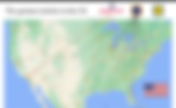
Aldi Sud, Lidl and Trader Joe (owned by Aldi Nord) are conquering America. Especially the Aldi stores print a strong growth. Together they run as of August 2023 more than 3030 stores, supported by 38 distribution centers.
- UAE: Discounter Gala opens 15th store in Dubai
Along the success of discounter Viva in the Emirates, neighborhood discounter Gala (owned by Western International Group) is working well on their way growing to take a solid position at the UAE market as well. Gala operates in densely populated localities providing a diverse range of food and non-food products that cater to the unique preferences of the Emirati as well as the international diaspora residing across the Emirates. Source: Gala #gala #uae #dubai #emirates #viva #westerninternationalgroup #growth #smartdiscount #discount #discountfoodretail #discounter #foodretail #retail #drc #consultancy #discountretailconsulting #retailconsulting #consulting
- Research: Private label accounts for nearly 22% of global grocery spend
New research from Market Reseach company Kantar has found that private labels currently account for nearly 22% of global grocery spend, up from 21.1% in 2021. Kantar said private labels have carved a strong trajectory, seeing a nine-fold growth in 2022 compared to the previous year. Kantar's Global Omnichannel Report said that across all major modern trade channels, private label products are surging ahead of brands. The largest gains have been observed in super/hypermarkets and convenience channels, where store brands have gained 0.8% and 1% share, respectively. Discounters At the same time, brands actually faired comparatively well in the discounters, seeing higher growth in this largely private label-dominated channel. While the success of private label can be partly attributed to the rapid growth of discounters, Kantar said it is important to note that 68% of store brand growth originated from outside this channel. Europe A Key Market Kantar said the story of private-label success remains consistent across regions, with gains observed in most markets. The report said that Europe is the 'key region' for private label, fuelled by the importance and growth of the discount channel, but not limited to it. According to the report, 'Economic conditions have incited a behavioural shift among consumers towards discounters and private labels, altering the retail market dynamics. Amid the rising cost of living, shoppers are increasingly leaning towards private label products, yet the beneficiaries of this trend are not uniform across the board.' The 'Big 6' According to Europanel data from the 'Big 6' European markets, France, Germany, Great Britain, Italy, the Netherlands, and Spain, growth can also be attributed to two other factors, firstly, higher-than-average price rises, accounting for over half the rise in private label value share. A second factor to consider is the migration of shoppers from brands, which drove more than a quarter of the growth. Limited Presence In Asia, Kantar said private-label's presence is still limited, while Latin America similarly still favours brands, which account for 95% of grocery spend. France stands out as the only European market in which store brands did not gain share, contrasting with double-digit growth in fourteen European markets. Colombia and the United States are the only non-European markets featuring in the top 20 biggest private-label markets globally. Despite seeing +21% and +7% growth respectively, Kantar said store brands capture less than one-quarter of spend in both, remaining comparatively lower than many European markets. Aldi and Lidl In Britain, where private-label sales in actual terms are greater than anywhere else in Europe, Kantar said the focus on private label by discounters Aldi and Lidl has seen them lift their percentage of private label sales from 86.5% in May 2021 to 87.8% in May 2023. They do so while concurrently expanding their share of private label spending and volume. Aldi and Lidl saw their share of the private label spending market increase from 21.3% in May 2021 to 26.7% in May 2023. Read more: Private Label Accounts For Nearly 22% Of Global Grocery Spend: Kantar | ESM Magazine