
Netherlands: Aldi Dominates as the "Discount Era" Solidifies

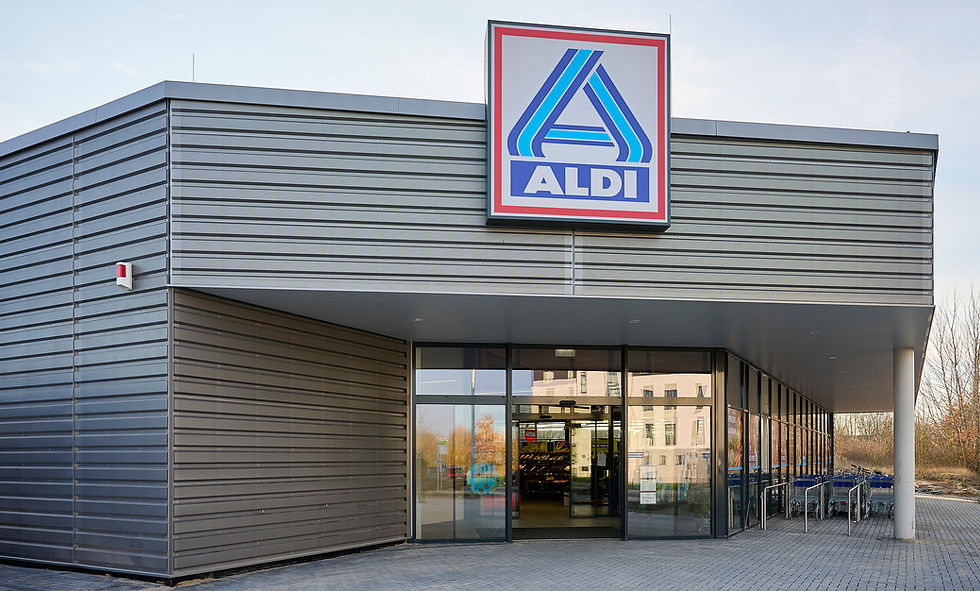
Discount Retail Chain Aldi Netherlands has emerged as the clear victor in the 2025 battle for market share. As more players release their year-end data, the trend is undeniable: Aldi’s rapid ascent has forced a total reopening of the industry dialogue regarding margins, pricing, and value. However, the 2025 narrative is not just about who gained percentage points, but the strategic shifts behind those gains.
Growth Driven by Inflation, Not Volume Total spending in the broader food market grew by 3.1% compared to 2024, a growth almost entirely fuelled by price inflation. While the value of the average shopping basket rose by more than 3.5%, purchase frequency remained flat. Essentially, consumers are not buying more often, they are simply paying more per visit, which has fundamentally altered shopping behaviour.
The Great Divide: Discount vs. Service
The shift from service-oriented channels to discount models accelerated in 2025:
Hard Discount: This segment remains the market's primary engine. Aldi led the pack with a remarkable market share index of 114, a growth rate unseen in this category for years. Lidl maintained strong performance, while Budgetfood showed impressive growth from a smaller base.
Soft Discount: Growth here was steady but less explosive. Nettorama gained roughly half a percentage point following the Boni acquisition, and Vomar continued its steady climb. Dirk, however, remained relatively flat. The takeaway is clear: "Discount" now spans a broad spectrum, from pure price-play to pragmatic value.
A New Competitive Field
The "Other" category has evolved into a serious competitive arena. Ethnic retailers like Sahan and Tangier are gaining visible ground, even as niche players like Amazing Oriental and Ekoplaza saw slight declines.
In the digital space, Picnic gained approximately 0.3% market share, driven by a 10% increase in household reach. Today, 1 in 6 Dutch households has used Picnic at least once. Alongside Crisp, Flink, and Uitgekookt.nl, online players are increasingly outperforming the broader market.
Retailer Performance: Quarterly Trends
Albert Heijn: Started Q1 strong, buoyed by the "tobacco ban" effect from the previous year. They maintained stability throughout the year and dominated the festive season, capturing over 50% market share during the Christmas peak by successfully blending premium quality with convenience.
Aldi: Carried its 2024 momentum through the year. While year-on-year growth appeared to slow in Q4 due to a very strong 2024 baseline, they still secured a 0.5 percentage point gain in the final quarter.
Jumbo: A year of two halves. Significant losses in the first six months gave way to stabilization in the second half, with minor market share recovery. However, a definitive upward trajectory is not yet established.
Lidl: Experienced the inverse of Jumbo. Strong pre-summer momentum faded as penetration flattened, leading to a loss of market share in Q4, though they remain a formidable force in the discount sector.
Looking Ahead to 2026: Structural Change or Temporary Shift?
The data suggests that the shift toward discount is no longer a temporary trend but a structural preference. Even as inflation potentially eases, price consciousness is here to stay.
Key Factors for 2026:
Margin Pressures: With tight margins and limited "stretch," a full-scale price war seems unlikely, though tactical skirmishes will continue.
The Digital Edge: Albert Heijn’s investment in automation and personalized loyalty is paying dividends, creating a gap that Jumbo and Plus must address to regain lost ground.
Cross-Border Leakage: Cross-border shopping continues to weigh on Dutch margins. Nearly 3% of supermarket turnover—an increase of 0.5 percentage points—is now spent across the border.
Channel Blurring: As non-food retailers and online platforms add food to their assortments, price-relevant offerings will continue to lure consumers away from traditional channels.


This is a valuable overview of how Aldi’s growing market share reflects the broader shift toward discount retail in the Netherlands. The comparison between hard discount, soft discount, traditional supermarkets, and emerging online grocery players like Picnic highlights how changing consumer priorities are influencing the competitive landscape. The points about inflation, price-conscious shopping, digital innovation, and cross-border leakage also provide useful context for understanding the structural changes expected in 2026. It will be interesting to see how retailers respond to these trends and whether service, convenience, or low prices will have the greatest impact on future market share. For students interested in programming and retail technology, resources that help them Do My Java Homework can also be useful for understanding the…
This breakdown really highlights how inflation has reshaped shopping habits rather than boosted real demand, and the Aldi example makes that shift feel very tangible. As a student, I noticed my own grocery runs becoming less frequent but more expensive last year, which forced me to rethink priorities, especially when juggling things like coursework and Take My Online Algebra Class during a packed semester. The article’s point about discount becoming a structural preference rings true, since value now feels less like a phase and more like a long-term mindset.