
Research: The 2026 Retail Blitz: Five-Way Battle for China’s Quality-Price Era

In 2026, the Chinese retail market has moved past the simple "supermarket vs. online" debate. It is now a high-stakes clash between five distinct discount retail business models. While these giants are expanding rapidly, they remain regionally focused, carving out "fortresses" in specific urban clusters across China.
The Five-Way Strategic Clash (2026)
The battle for the Chinese wallet is now split into five "tracks," each defined by a different logic of efficiency, branding, and technology.
Retailer | Business Model | Core Strategy | Regional Fortress |
Aldi | Hard Discount | 90%+ Private Label; extreme operational efficiency. | East China (Shanghai, Suzhou, Nanjing) |
Ottno (奥特乐) | Branded Discount | High-end global brands at "broken" prices; mall-based. | Southwest China (Chongqing, Chengdu) |
Hema NB | New Retail Discount | Data-driven; aggressive franchise scaling; lowest price floor. | National / Central (Hubei, Henan, Tier 3-4 cities) |
Tiaomo (挑挑末) | Liquidation Discount | Global surplus and "near-expiry" treasure hunting. | Northern China (Beijing, Tianjin, Liaoning) |
Wumart | Hybrid / AI Retail | AI-driven supply chain + Government livelihood supply. | North China / Jing-Jin-Ji (Beijing, Hebei) |
1. Aldi: The Master of the "Hard Discount"
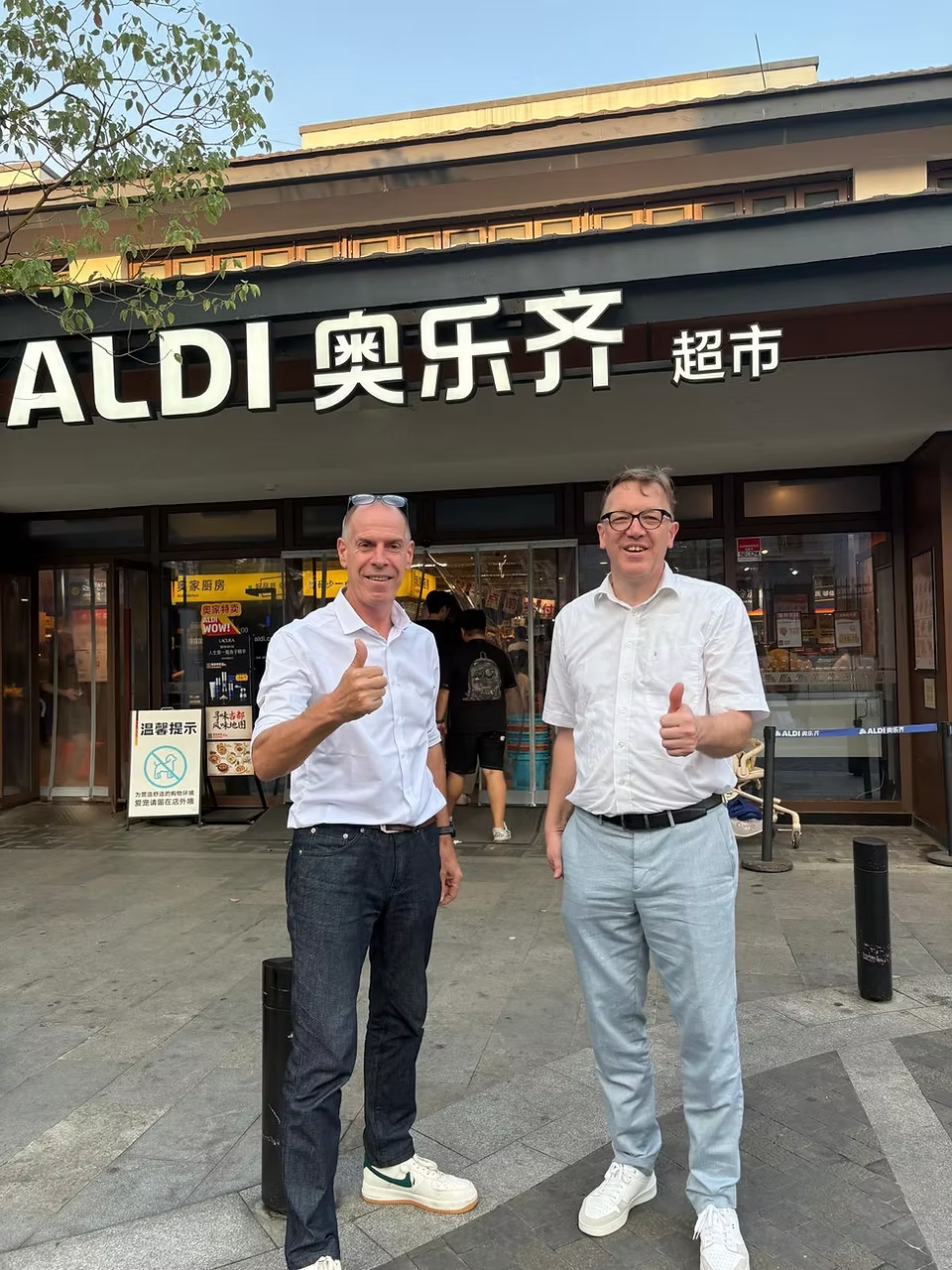
Aldi’s expansion is surgical. By staying within the Yangtze River Delta, they maintain a tight supply chain. Their 90% private-label ratio allows them to control quality and price simultaneously. They win by being the "trusted pantry" for the rational urban middle class.
2. Ottno (奥特乐): The "Z-Generation" Magnet
Ottno has turned the discount model into a lifestyle. Instead of staples like milk and flour, Ottno focuses on "Affordable Luxury." By sourcing parallel imports of global beauty and snack brands, they allow young consumers in cities like Chongqing and Chengdu to buy SK-II or premium imported chocolates at 40% off. Their mall-based, small-store format thrives on high foot traffic.
3. Hema NB: The "Down-Market" Conqueror
While Aldi targets the middle class, Hema NB (Neighborhood Business) targets the pragmatic masses. Using a low-cost franchise model, they have flooded lower-tier cities. They are the "price floor" of the industry, often pricing fresh produce lower than traditional wet markets. Their strength lies in Alibaba’s massive data pool, which predicts exactly what a neighborhood in a Tier-3 city needs to eat that night.
4. Tiaomo (挑挑末): The "Treasure Hunt" Specialist
Tiaomo represents the Soft Discount model. They thrive on the "waste" of the global supply chain—overstock, packaging changes, or near-expiry goods from Tier-1 brands. Because their inventory changes daily, they turn grocery shopping into a sport. Consumers in Northern China visit Tiaomo not for a shopping list, but to see what "deals" they can discover.
5. Wumart: The AI & Livelihood Fortress
Wumart has successfully defended its territory in the Jing-Jin-Ji (Beijing-Tianjin-Hebei) region by becoming "too vital to fail." By integrating AI into their demand forecasting, they have achieved 2.5x sales growth in renovated stores. More importantly, they handle "Livelihood Assurance", acting as the government’s partner for essential food security during supply shocks, a level of local integration foreign brands struggle to match.
Regional Specialization: The "Walled Garden" Phase
Despite the aggressive rhetoric of "national expansion," 2026 shows that retail in China remains a game of regional logistics.
Aldi is hesitant to leave the East because their fresh-food supply chain is localized there.
Wumart dominates the North because of its deep political and real estate roots.
Ottno dominates the West because its "trendy-but-cheap" vibe perfectly matches the consumption culture of Chengdu and Chongqing.
The 2026 Verdict: The "winner" of the retail war is no longer the store with the most locations, but the one that best masters its specific Regional Track. The consumer is the ultimate beneficiary, enjoying a "split-screen" life: buying milk at Aldi, hunting for snacks at Tiaomo, and getting AI-delivered vegetables from Wumart.
#smartdiscount #china #expansion #growth #wumart #development #hemanb #aldi #ottno #tiaomo #regional #drc #discount #retail #consulting #discountretail #discountretailconsulting #retailconsulting #google #twitter #harddiscount #hd


Comments