
China: The Chinese Discount retail evolution in 2025

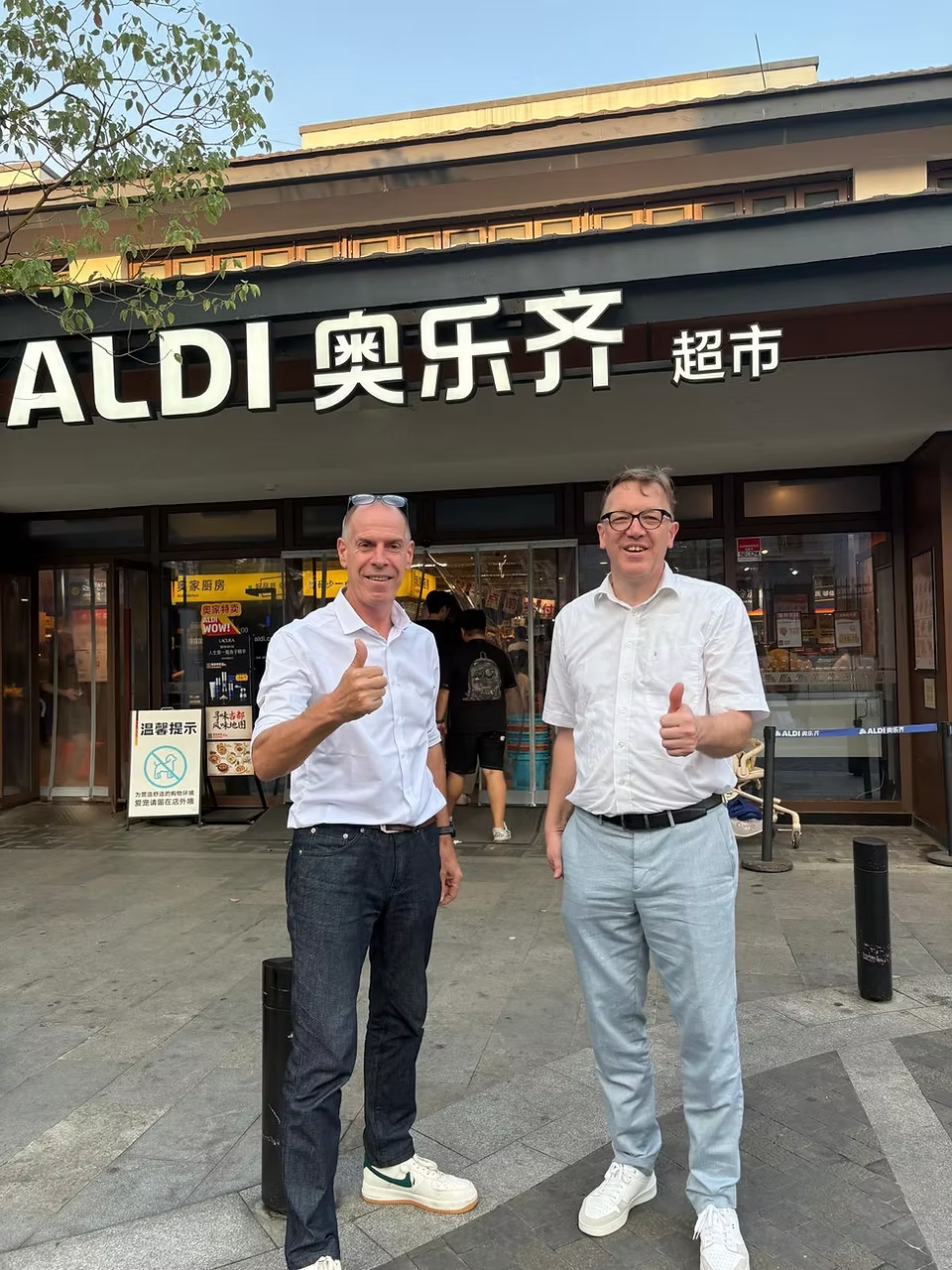
Discount Retail became in 2025 a buzzword in China, with the concept of "discount" evolving beyond a mere consumer strategy of "buying more for less." It represented a significant strategic transformation for the entire industry. Reflecting on this, the global discount retail sector experienced an unprecedented upheaval, beginning with Aldi China with digital presence in 2017 and physical stores in 2019.
Subsequently, the top three Chinese tech giants, JD.com and Meituan, opened physical stores, while traditional players like Hema (owned by Alibaba) and Wumart embarked on radical "Hard Discount" reforms. Discounting has transcended being just a trend; it has become a "certainty wave." The victors are those who can effectively integrate supply chains with offline experiences to redefine the boundaries of "cheap" and "good."
The Top 10 Key Developments in 2025
01. JD.com
Opens its First Discount Supermarket (National) On August 16, 2025, JD.com officially entered the large-scale discount supermarket race in Zhuozhou, Hebei. The 5,000 sqm store attracted 60,000 visitors on its first day. It features over 5,000 daily essential SKUs with a "Low Prices Every Day" strategy, bridging JD’s online logistics with instant offline delivery.
02. Meituan’s "Happy Monkey" (快乐猴)
Discount Supermarket Debuts On August 29, 2025, Meituan’s community hard-discount brand opened its first store in Hangzhou. Under 1,000 sqm, it focuses on high-frequency daily necessities. A highlight is the "Happy Kitchen," offering fresh baking and hot food, achieving first-day sales of over 400,000 RMB.
03. Chao He Suan (Hema) NB
Upgrades to "Hema Super-Value NB" (超盒算NB) and Opens Franchising Hema transitioned its hard-discount business from self-operated to a franchise model. This move covers key cities like Shanghai and Hangzhou. The strategy relies on "Three Highs and Three Lows" (High efficiency/output vs. Low price/waste/margin), with private labels accounting for 60% of stock.
04. Discount Cow (折扣牛)
Expands Globally with a 100-Store Target Founder Ma Xintong announced plans to open 100 stores in Singapore within three years. This follows a strategic partnership in the US with Maison Solutions. The goal is to export China’s ultra-efficient supply chain to overseas Chinese retail markets.
05. Wumart (物美)
Doubles Down on the Discount Track The Beijing-based retail giant opened six "Wumart Value" (物美超值) hard-discount stores simultaneously. They reduced SKUs to under 1,300 (only 15% of a traditional hypermarket) and prioritized factory-direct private labels to ensure price competitiveness.
06. Zhongbai Group (中百集团)
Massive Transformation: 51 Stores Open at Once The Hubei retail leader set a record by opening 51 hard-discount stores in a single batch. By eliminating middleman markups through "Naked Price Direct Sourcing," they reduced overall prices by over 20%, focusing on a 1-3km community service radius.
07. Don Quijote (PPIH)
Launches "Food Supermarket" Brand The Japanese discount giant announced a new food-focused format for 2026, aiming for 200-300 stores by 2035. Food will make up 60% of the inventory, leveraging their "discount editing" expertise for community consumption.
08. HotMaxx (好特卖)
Opens "Super Warehouse" in Beijing The soft-discount leader opened a 10,000 sqm warehouse store in Beijing. Beyond snacks, it added seven zones for luxury goods, outdoor sports, and beauty, introducing over 3,000 brands to attract families alongside its younger core audience.
09. Hubei’s "Le'erle" (乐尔乐)
Stumbles in Shanghai, Shanxi, and Gansu The rising star of the "Down-Market Pinduoduo" model faced setbacks in national expansion. Store closures in major cities highlighted the difficulty of replicating a low-tier market model in high-cost areas where logistics and quality demands are higher.
10. Lianhua Huashang (联华华商)
Deploys 14 "Lianhua Fude" (FD) Stores in Hangzhou Targeting the community retail trend, this brand focuses on high-quality daily essentials with 1,200 core SKUs. Using factory-direct sourcing and customized products, they aim to capture the "high quality-to-price ratio" market.
Conclusion
The common thread of 2025 is that the competition has entered the "Deep Water Zone," where the supply chain is the foundation and user experience is the axis. Discount stores are not charities; low prices must be matched by extreme operational efficiency. As Hema, Zhongbai, and Le'erle have shown, relying solely on low prices or rapid land-grabbing is not a sustainable path to victory.


Comments